



WHAT IS DELTA T IN A CHILLER SYSTEM?
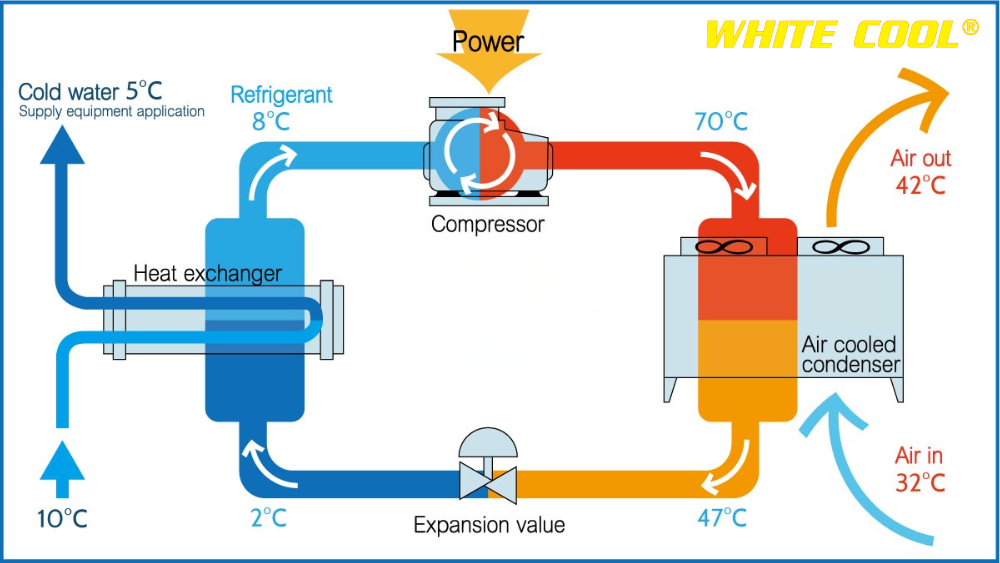
Delta T (ΔT) is the temperature difference between the chilled water returning to the chiller and the chilled water supplied from the chiller to the system.
For example, if chilled water is supplied at 7°C and returns to the chiller at 12°C, the Delta T is 5°C.
This parameter indicates how much the water temperature increases after absorbing heat from equipment or manufacturing processes. Delta T is closely related to the cooling load and water flow rate in the system.
WHAT IS LOW DELTA T, AND WHAT CAUSES IT?
Low Delta T occurs when the actual water temperature difference is significantly lower than the design value under comparable operating conditions.
Common causes include:
-
Low cooling load: Actual cooling demand decreases compared with the design conditions.
-
Excessive water flow: The water flow rate is higher than necessary for the heat load.
-
Improperly balanced chilled water system: Control valves or water distribution to individual units do not meet system requirements.
-
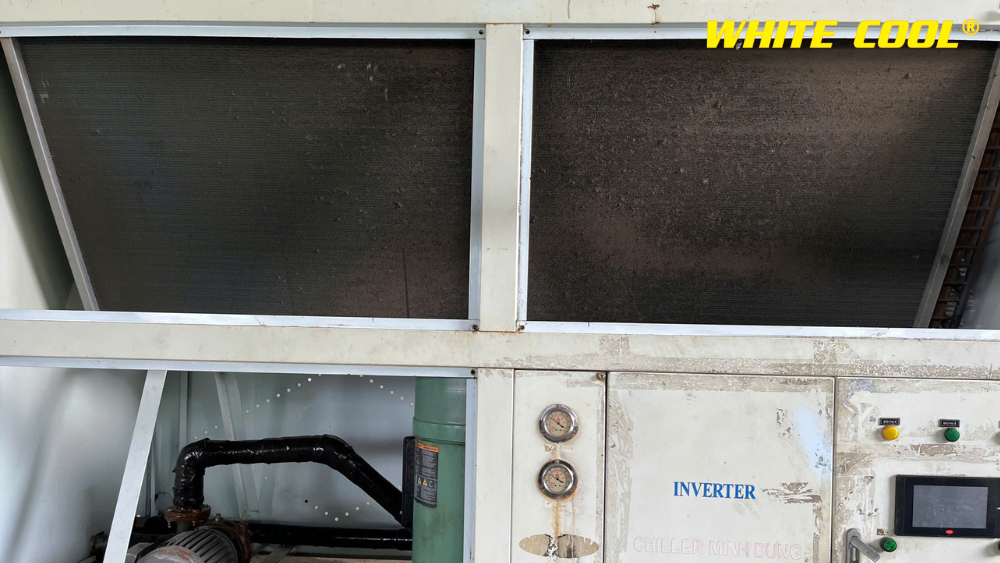
Reduced heat transfer performance: Heat exchangers become fouled, or operating conditions change.
It is important to note that low Delta T does not necessarily mean the chiller is faulty. Businesses should assess the cooling load, water flow rate, and other operating parameters together to identify the root cause.
HOW DOES LOW DELTA T AFFECT A CHILLER SYSTEM?
When low Delta T persists, the system may require a higher water flow rate to transfer the same amount of heat. This can increase chilled water pump power consumption and affect the overall operating efficiency of the system.
For factories that operate chillers continuously, maintaining an appropriate Delta T can help optimize chilled water system performance and reduce unnecessary energy costs.
However, Delta T should be evaluated under actual load conditions, as it may naturally decrease when cooling demand is low.
WHAT IS THE APPROPRIATE DELTA T VALUE?
There is no single Delta T value that applies to every chiller system. The appropriate value depends on the system design, supply and return water temperatures, cooling load, water flow rate, and application requirements.
In many chilled water systems, a design Delta T of approximately 5°C is a common reference. However, this value is not universally applicable to every project.
Businesses should compare the actual Delta T with the design value of their specific system rather than assuming that a lower Delta T always means better energy efficiency.
HOW TO CHECK AND OPTIMIZE DELTA T IN A CHILLER SYSTEM
To evaluate Delta T, businesses should:
-
Monitor chilled water supply and return temperatures.
-
Compare actual Delta T with the design specifications at different load conditions.
-
Inspect water flow rates, pumps, control valves, and heat exchangers.
-
Monitor the actual cooling load and maintain a regular maintenance schedule.
Water flow should not be adjusted arbitrarily just to achieve a target Delta T before the underlying cause has been identified, as incorrect adjustments may affect the operation of the entire system.
WHITE COOL – CHILLER SOLUTIONS TAILORED TO OPERATING REQUIREMENTS
White Cool provides industrial chiller solutions, including air-cooled chillers, water-cooled chillers, and Inverter Chillers, to meet cooling requirements across various manufacturing industries.
When selecting a chiller, businesses should consider cooling capacity, required water temperature, cooling load, water flow rate, and actual operating conditions.
For systems experiencing low Delta T, high water flow rates, or unstable water temperatures, an overall system assessment can help identify the root cause and determine an appropriate optimization strategy.
Contact White Cool for consultation on industrial chiller solutions tailored to your business requirements.

CONCLUSION
Delta T in a chiller system is an important parameter for evaluating heat transfer performance and the relationship between cooling load, water temperature, and water flow rate. Persistently low Delta T may indicate that the system requires inspection, but it must be analyzed under actual operating conditions.
Monitoring Delta T, inspecting the chilled water system, and selecting a suitable chiller can help maintain stable operation and control energy costs.