



THE ROLE OF WATER FLOW RATE IN A CHILLER SYSTEM
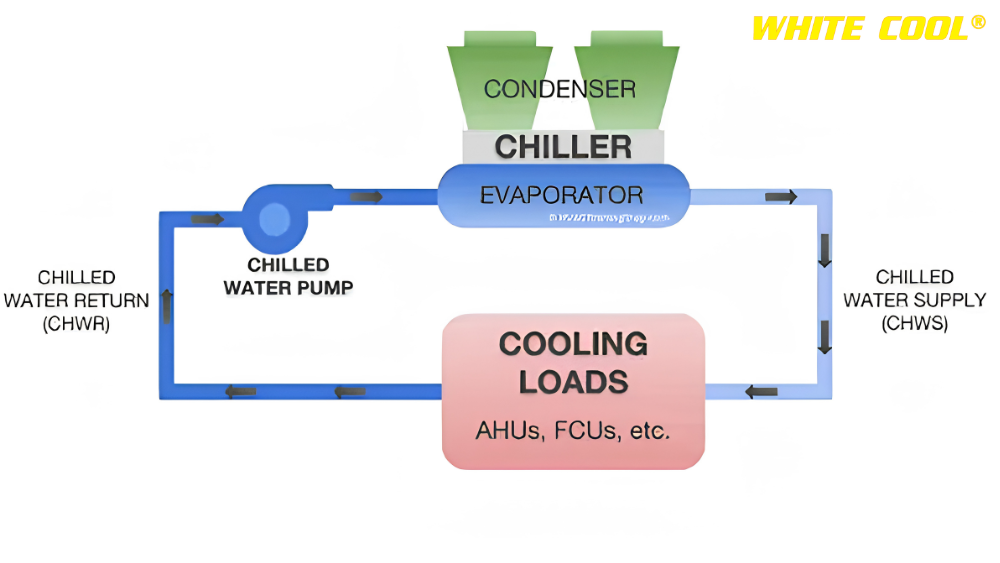
Chillers operate on the principle of heat exchange, where water acts as an intermediary medium to carry heat from the area to be cooled to the outside. Water flow rate is the speed at which water flows through the evaporator and condenser coils.
When the water flow rate meets the design standards, the heat exchange process is optimized. Heat is absorbed and released quickly, ensuring stable system operation, high efficiency, and energy savings.
Conversely, if the water flow rate is inadequate, the entire heat transfer process will be affected, leading to serious operational consequences.
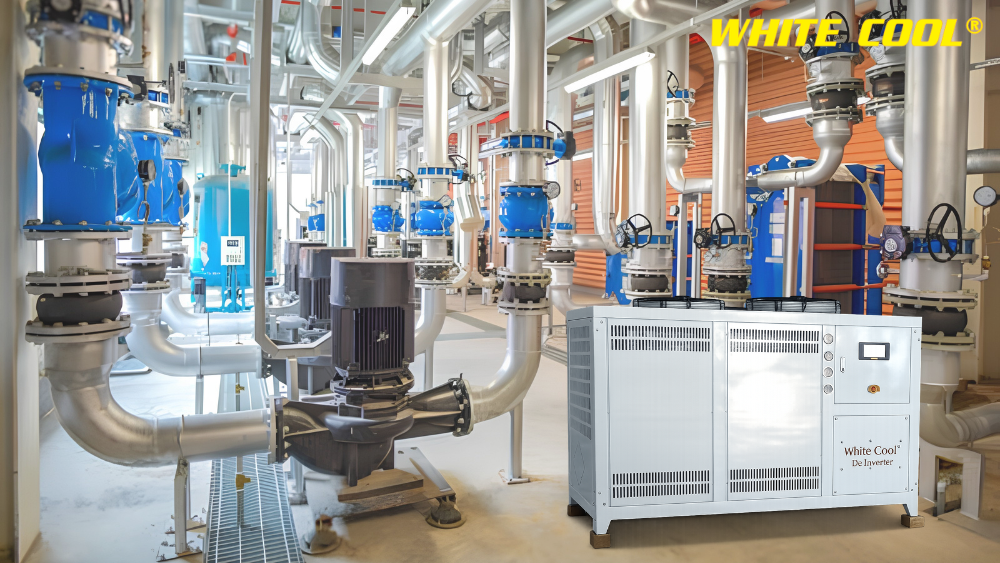
HOW DOES LOW WATER FLOW RATE AFFECT EFFICIENCY?
When the water flow rate is lower than required, the flow rate slows down, limiting heat absorption. This prevents the water temperature exiting the evaporator from reaching the desired level, causing the system to operate longer to reach the set temperature.
As a result, the compressor has to run at high load for extended periods, consuming more electricity and easily leading to overload. Furthermore, low water flow increases the risk of evaporator coil freezing, causing serious damage to the equipment.
In the long run, this not only reduces efficiency but also shortens the lifespan of the entire chiller system.
IS EXCESSIVE WATER FLOW REALLY GOOD?
Many people believe that increasing water flow will help cool faster; however, this is not entirely accurate. When water flow is too high, the water moves too quickly through the heat exchanger, resulting in insufficient contact time for effective heat exchange.
As a result, heat is carried away before it has time to transfer completely, reducing overall cooling efficiency. At the same time, the water pump has to operate at a higher capacity to maintain high flow, leading to significantly increased power consumption.
In addition, excessive flow can cause erosion of pipes and equipment in the system, affecting their long-term durability.
THE RELATIONSHIP BETWEEN WATER FLOW AND ENERGY EFFICIENCY
Chipper efficiency is typically evaluated through metrics such as COP or kW/RT. Inappropriate water flow will significantly reduce these metrics.
When the flow rate is adjusted correctly according to the design, the system achieves a balance between heat load and heat exchange capacity. This reduces the load on the compressor, optimizes energy consumption, and maintains stable performance throughout operation.
Conversely, even a small deviation in flow rate can unbalance the system, leading to increased operating costs that businesses may not immediately recognize.
EFFECTIVE WATER FLOW CONTROL SOLUTIONS
To ensure the chiller always operates at optimal efficiency, water flow control needs to be performed accurately and continuously. Businesses should use flow meters to monitor and adjust promptly when deviations occur.
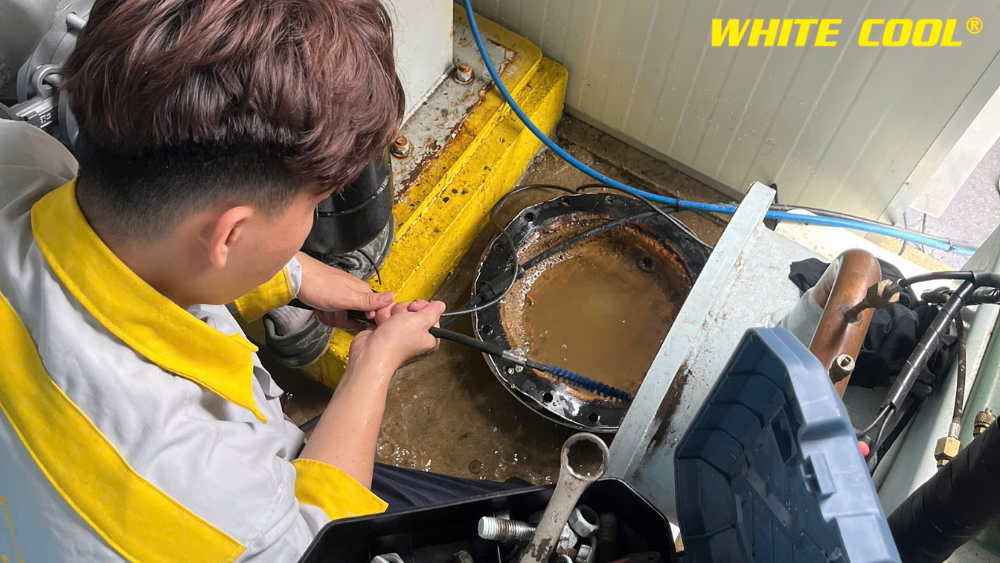
In addition, regular maintenance of pumps, pipelines, and filters is also crucial in maintaining stable flow rates. Dirt or blockages in pipelines can reduce flow rates without being easily detected.
In modern systems, integrating variable frequency drives (VFDs) for water pumps is also an effective solution to flexibly adjust flow rates according to actual load, thereby optimizing efficiency and saving energy.
WHITE COOL - OPTIMIZING CHILLER SYSTEM PERFORMANCE
White Cool not only provides equipment but also focuses on comprehensive solutions to help businesses operate chiller systems efficiently and sustainably. From design consultation and capacity selection to optimizing water flow and balancing the system, White Cool's technical team always ensures that all operating parameters meet standards from the outset.
Specifically, White Cool provides services for inspecting, evaluating, and improving existing systems, helping to detect water flow-related issues such as insufficient flow, excessive flow, or uneven distribution. This allows for the development of appropriate solutions to reduce energy consumption and improve actual efficiency.
In addition, White Cool's regular maintenance services and long-term technical support ensure the system maintains stable operation, minimizing risks and optimizing costs for businesses.
CONCLUSION
Water flow rate is not just a technical parameter but a core factor directly affecting the operational efficiency of a chiller system. Whether too low or too high, inappropriate water flow rates negatively impact cooling capacity, energy costs, and equipment lifespan.
Therefore, to ensure stable, durable, and efficient chiller system operation, businesses need to pay special attention to designing and controlling water flow rate from the outset. This is the key to optimizing operating costs and improving production efficiency in the long term.
Contact White Cool today if your business is experiencing chiller performance issues or you want to optimize your cooling system. White Cool is ready to partner with you with practical, effective, and sustainable solutions.