



WHAT IS THE INJECTION MOLDING CYCLE? WHY DOES COOLING DETERMINE CYCLE TIME?
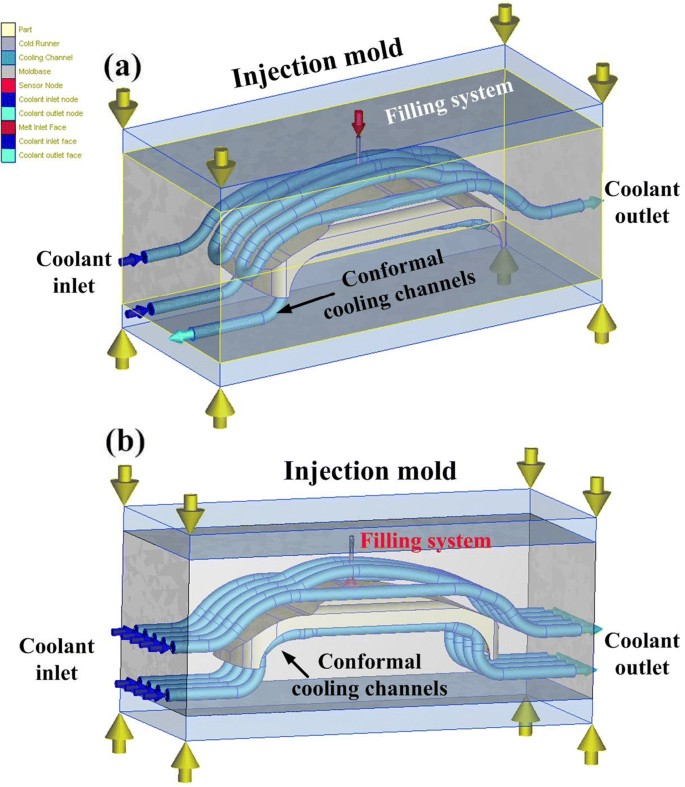
The injection molding cycle is the total time required to complete one product, including plastic injection, holding pressure, mold cooling, and mold opening–ejection. Among these stages, mold cooling typically accounts for 40–70% of the total cycle time, especially for thick products or those requiring high dimensional accuracy.
When cooling is inefficient, heat inside the mold cannot be dissipated quickly enough, forcing operators to extend cooling time to avoid defects. An unstable mold temperature also prevents early mold opening, even when injection and holding parameters have already been optimized. As a result, the injection molding cycle is prolonged, and to ensure product quality, many factories have no choice but to accept cycle times longer than the original design.
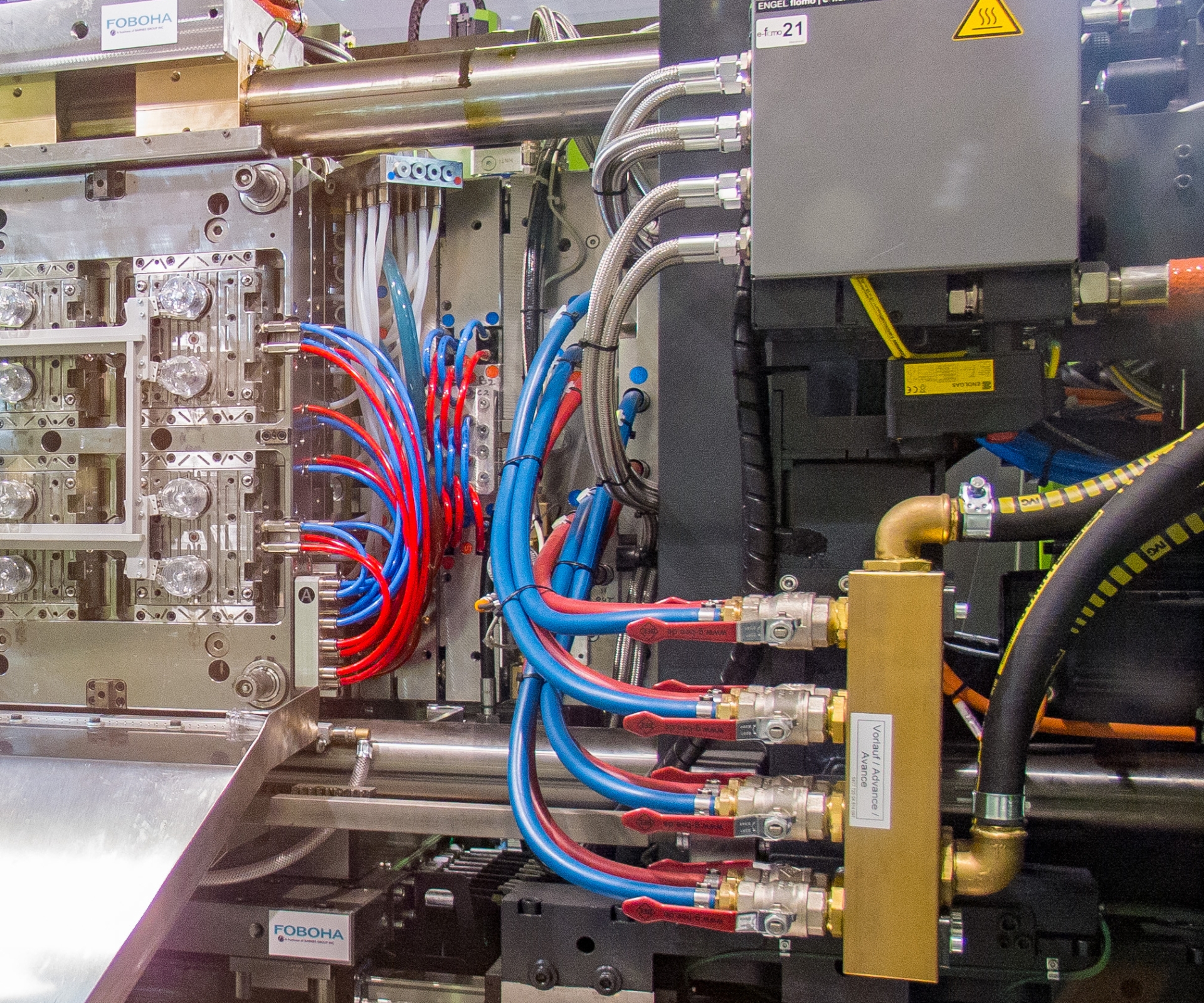
(Quote from network source)
SIGNS OF A PROLONGED PLASTIC INJECTION MOLDING CYCLE DUE TO POOR COOLING
In practice, a prolonged plastic injection molding cycle due to poor cooling can be identified through several clear signs. Cooling time tends to increase gradually during a production shift, especially when ambient temperatures are high. Mold temperature fluctuates significantly and cannot be maintained at the desired level. Products are prone to warping, uneven shrinkage, or dimensional deviations. Even after other parameters are optimized, the injection machine still has to “wait for cooling,” wasting valuable time. In some cases, machines using the same mold show inconsistent productivity. If the root cause of cooling is not addressed, all other optimization efforts remain temporary.
COMMON CAUSES OF INEFFICIENT COOLING SYSTEMS
One major cause is inappropriate chiller capacity. Many factories select chillers based on intuition or price rather than calculating the actual heat load of each mold and each production stage. This leads to underloaded or overloaded chillers, both of which reduce cooling efficiency.
In addition, traditional ON/OFF chillers are still widely used. These systems cause large fluctuations in water temperature and fail to maintain stable mold temperatures, thereby contributing to a prolonged injection molding cycle. Their poor ability to adapt to changing heat loads further reduces overall system performance.
Air-cooled or water-cooled heat rejection systems that are not properly maintained can suffer from dirty condensers, reducing heat exchange efficiency. Under high ambient temperatures, these systems are even more likely to become overloaded. Furthermore, poorly designed water distribution—uneven flow between molds or long piping with high pressure losses—also undermines overall cooling effectiveness.
CONSEQUENCES OF A PROLONGED PLASTIC INJECTION MOLDING CYCLE DUE TO POOR COOLING
The most immediate consequence is reduced output per shift, with actual machine capacity falling short of expectations. Electricity costs increase as machines run longer and chillers operate inefficiently. Product quality becomes inconsistent, defect rates rise, and brand reputation may be affected. In the long term, factories struggle to scale production and to achieve key performance indicators related to productivity and cost control. Clearly, to reduce cycle time sustainably, manufacturers must start by improving their cooling systems.
OPTIMAL SOLUTION: DC INVERTER CHILLERS – THE KEY TO SHORTENING THE INJECTION MOLDING CYCLE
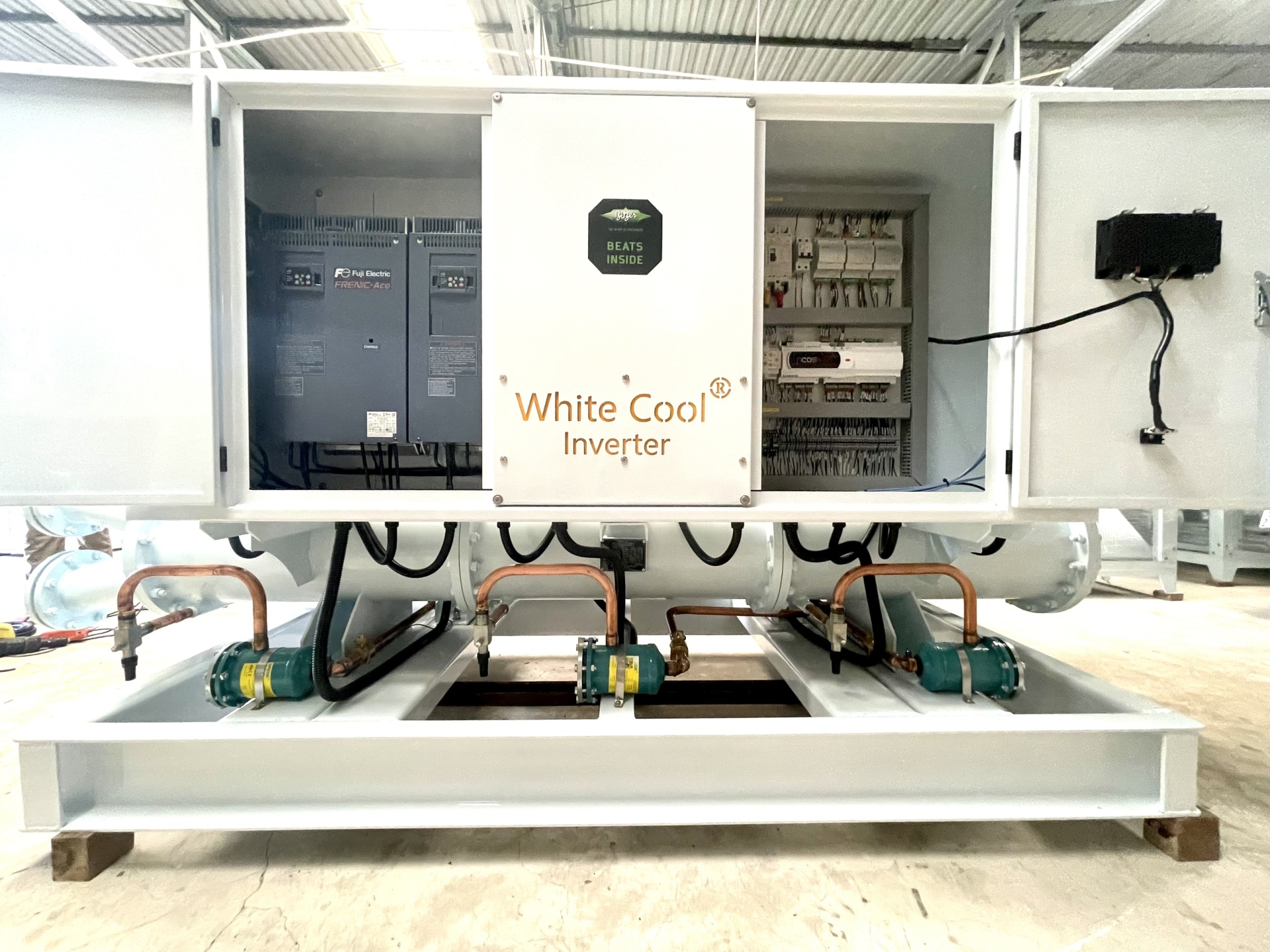
Unlike conventional chillers, DC Inverter chillers can adjust their capacity according to the actual heat load. As a result, chilled water temperature is maintained stably, typically within ±0.5°C. With stable water temperature, molds reach thermal equilibrium more quickly, allowing cooling time to be shortened while still ensuring product quality. This is the key factor in reducing a prolonged plastic injection molding cycle due to poor cooling.
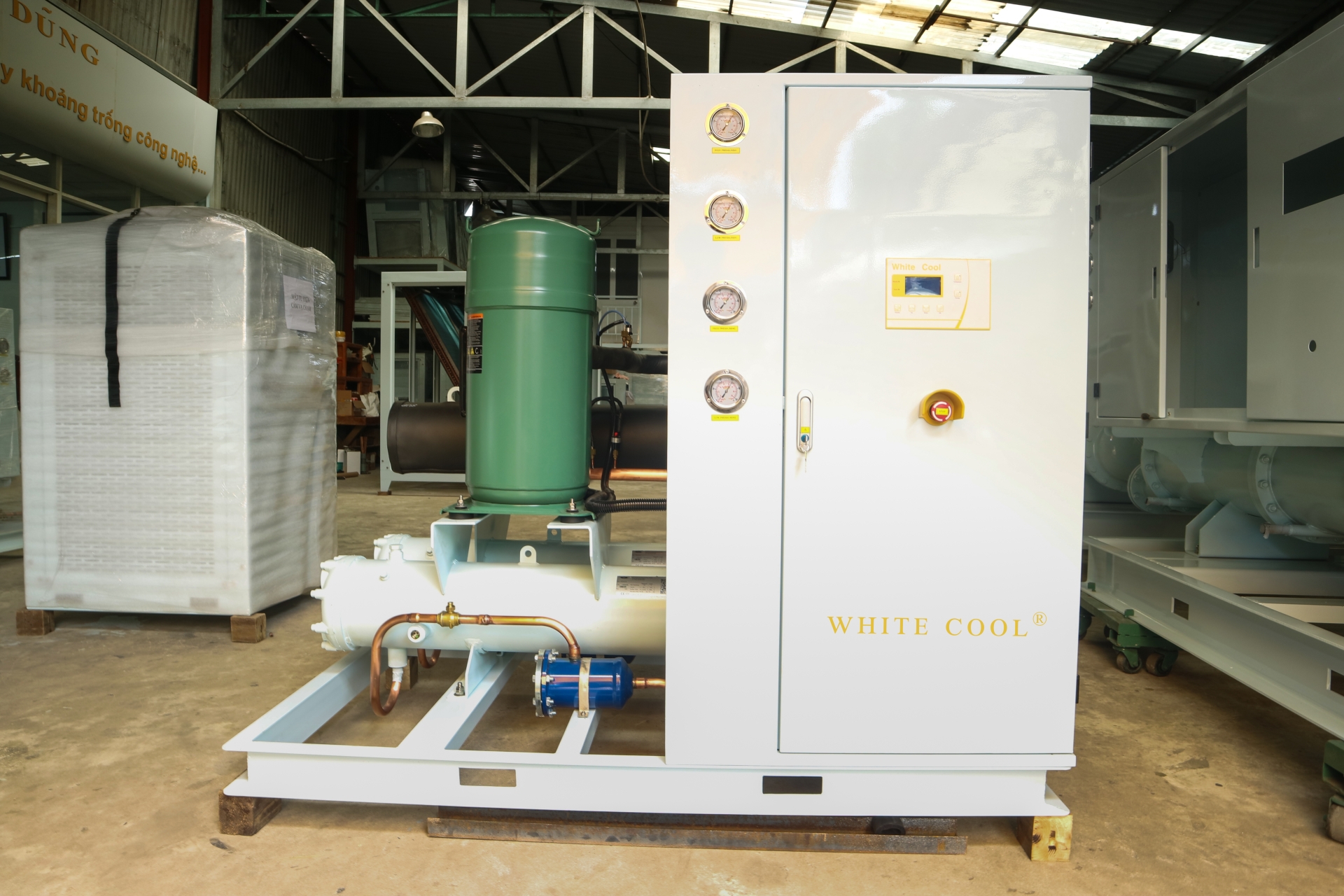
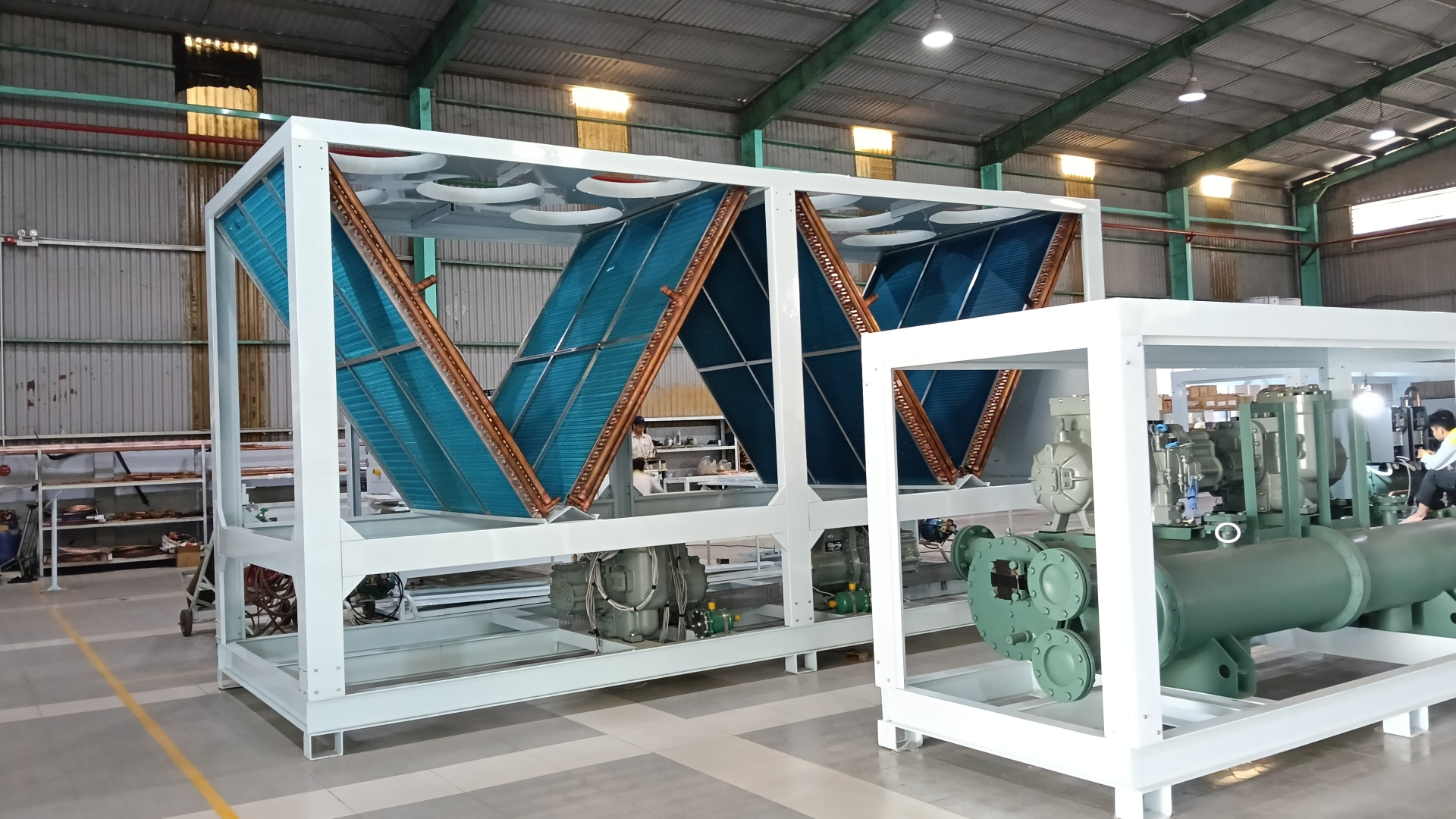
White Cool DC Inverter air-cooled and water-cooled chillers are specifically designed for plastic manufacturing plants, offering a wide range of capacities suitable for small workshops to large-scale factories. Air-cooled solutions provide flexibility and ease of installation, while water-cooled systems deliver high efficiency and are ideal for continuous 24/7 operation. White Cool focuses on real operational benefits: temperature stability, energy savings, and improved reliability across the entire production system.
REAL-WORLD RESULTS AFTER IMPROVING THE COOLING SYSTEM
Many factories that have optimized their cooling systems report a reduction of 10–30% in injection molding cycle time. Output increases without the need to invest in additional injection molding machines. Chiller energy consumption is significantly reduced thanks to load-based operation. More importantly, production processes become more stable, easier to control, and less risky, providing a solid foundation for future expansion.
(Quote from network source) CONCLUSION
A prolonged plastic injection molding cycle due to poor cooling is not a problem of the injection machine alone, but a system-level challenge. Investing in the right cooling solution—especially DC Inverter chillers—not only shortens cycle time but also optimizes long-term operating costs.
Contact White Cool today to receive an on-site heat load assessment, professional consultation on suitable DC Inverter chillers air-cooled or water-cooled, and a detailed quotation along with the optimal solution for your plastic manufacturing plant.