



WHERE DO ELECTRICITY COSTS IN PLASTIC FACTORIES COME FROM?
To effectively control electricity costs in plastic manufacturing, companies must first clearly understand the main sources of electricity consumption within their factories. Typically, electricity is distributed among four major equipment groups: injection molding machines, mold cooling systems, air compressors, and chiller systems with chilled water pumps.
Among these, chillers play a particularly critical role. Unlike many machines that operate intermittently, chillers often run continuously 24/7 to maintain stable temperatures for molds and production lines. With high installed capacity and long operating hours, even small design or operational inefficiencies can significantly increase electricity bills.
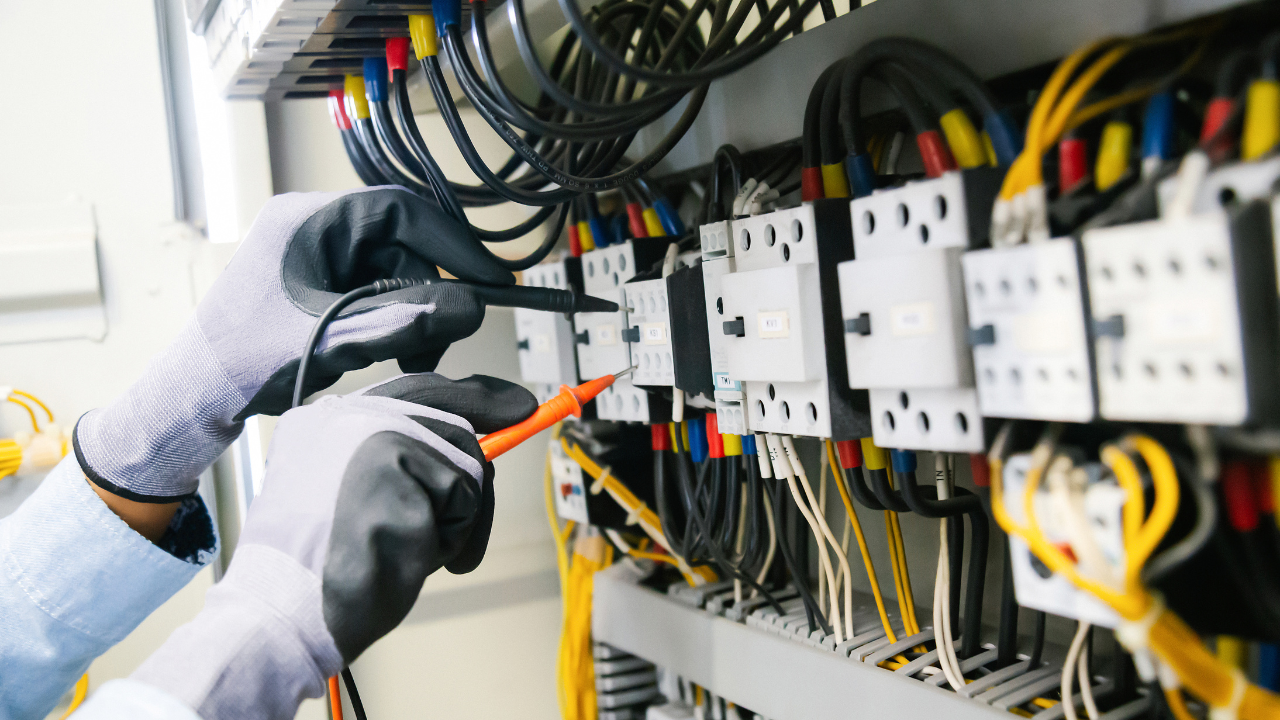
A common situation in many plastic factories is that chiller systems are oversized relative to actual demand or rely on conventional ON/OFF chillers. Under partial load conditions, these systems still operate at high capacity, resulting in poor efficiency at part load and unnecessary electricity consumption. Without proper control of the cooling system, electricity costs in plastic manufacturing are very difficult to optimize sustainably.
KEY REASONS BEHIND RISING ELECTRICITY COSTS IN THE PLASTIC INDUSTRY
One of the core reasons electricity consumption in the plastic industry continues to rise is fluctuating thermal loads across production shifts. The number of operating injection machines, their individual capacities, and mold cooling requirements constantly change, while many conventional chiller systems are not designed to adapt to such variability.
ON/OFF chillers are a typical example. Each start-up consumes a large amount of electricity and causes electrical and thermal shocks to the system. Frequent start-stop cycles not only increase power consumption but also accelerate component wear, shorten equipment lifespan, and lead to higher maintenance costs.
In addition, unstable mold temperatures indirectly increase electricity costs in plastic manufacturing. When temperatures fluctuate, molding cycles become longer, defect rates increase, and machines must operate longer to achieve the same output. As a result, electricity consumption rises without corresponding improvements in production efficiency.
Finally, many cooling systems are not designed based on actual thermal loads, leading to oversized capacity or operation outside optimal efficiency points. This technical bottleneck is something many plastic manufacturers have yet to fully address.

OPTIMIZING ELECTRICITY COSTS: START WITH THE COOLING SYSTEM
When discussing energy savings in plastic factories, many companies initially think of replacing injection molding machines or upgrading primary production lines. However, in practice, the cooling system is often the most effective and controllable starting point.
Chillers play a central role in maintaining stable mold temperatures, shortening cooling times, and ensuring consistent molding cycles. A well-optimized chiller system not only improves product quality but also reduces electricity consumption, especially under partial load conditions—the most common operating state in real-world production.
The current industry trend is shifting from conventional chillers to DC Inverter chillers. This technology allows cooling capacity to be adjusted flexibly according to actual load demand, instead of operating continuously at fixed high capacity, thereby significantly reducing unnecessary energy consumption.
DC INVERTER CHILLERS – AN EFFECTIVE SOLUTION TO REDUCE ELECTRICITY CONSUMPTION IN PLASTIC FACTORIES
DC Inverter chillers operate by modulating compressor capacity from 0–100% based on real-time thermal load demand. When the load is low, the system automatically reduces output instead of running at full capacity, maintaining high efficiency across all operating conditions.
In practical operation, this solution offers clear benefits: electricity consumption can be reduced by 30–45%, chilled water temperatures remain more stable, and thermal shock to molds and injection machines is significantly minimized. As a result, systems operate more smoothly, last longer, and maintenance costs are better controlled.
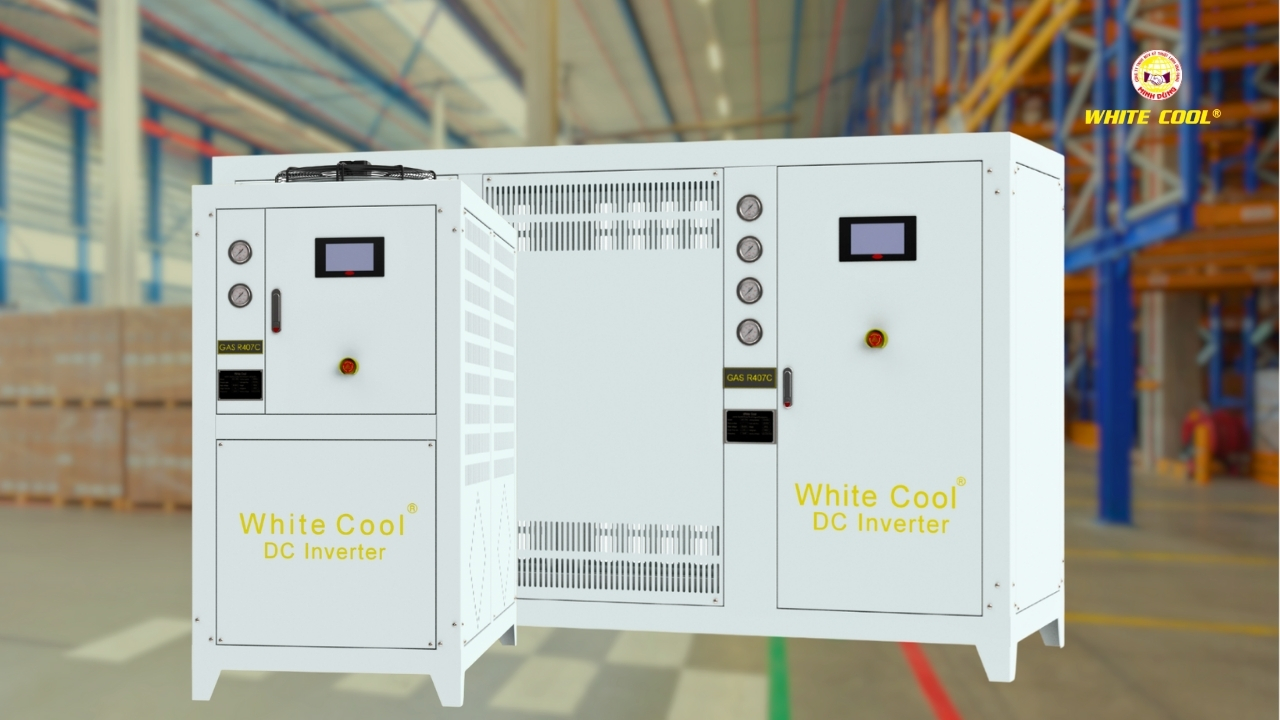
For B2B plastic manufacturers, White Cool’s DC Inverter chillers—available in both air-cooled and water-cooled configurations—are developed specifically to meet industrial production requirements such as fluctuating thermal loads, continuous 24/7 operation, and long-term electricity cost optimization. Rather than focusing solely on nominal specifications, these solutions are designed around real operating efficiency in factory environments.
CHOOSING THE RIGHT CHILLER TO CONTROL ELECTRICITY COSTS
To effectively manage electricity costs in plastic manufacturing, chiller selection should be based on actual load data rather than intuition or simply choosing larger capacity units. Companies should prioritize DC Inverter chillers with intelligent control systems, high customization for specific production lines, and ease of maintenance for long-term operation.
An important point to consider is that initial investment cost represents only a small portion of a chiller’s lifecycle cost. Electricity consumption and operating expenses are the long-term factors that determine overall financial performance. Making the right investment decision from the outset helps manufacturers avoid hidden costs throughout the production lifecycle.
CONCLUSION: REDUCING ELECTRICITY COSTS IS A LONG-TERM STRATEGY
Electricity costs in plastic manufacturing are no longer fixed expenses that must simply be accepted—they can be optimized with the right technical solutions. Among all options, cooling systems and chillers represent the most effective starting point.
By reassessing existing systems, accurately determining thermal loads, and considering suitable DC Inverter chiller solutions for each production line, plastic manufacturers can gain better control over energy consumption, improve operational efficiency, and be well prepared for future green manufacturing requirements.