



WHEN IS INVESTING IN LARGE-CAPACITY CHILLERS AN ADVANTAGE?
From a strategic perspective, investing in large-capacity chillers can bring clear benefits if the business is in a production expansion phase. As cooling demand is expected to increase in the near future, having a high-capacity system ready helps avoid production disruptions and frequent upgrades.
Additionally, in some cases, chillers operating at medium load (instead of always at full load) can reduce stress on critical equipment such as compressors, thereby extending system lifespan. This is especially true when the system is designed with intelligent control to distribute the load efficiently.
Another less-discussed benefit is redundancy. For plants requiring high stability, having "excess capacity" makes the system more flexible in the event of fluctuations or failures.
POTENTIAL RISKS OF CHOOSING OVER-CAPACITY
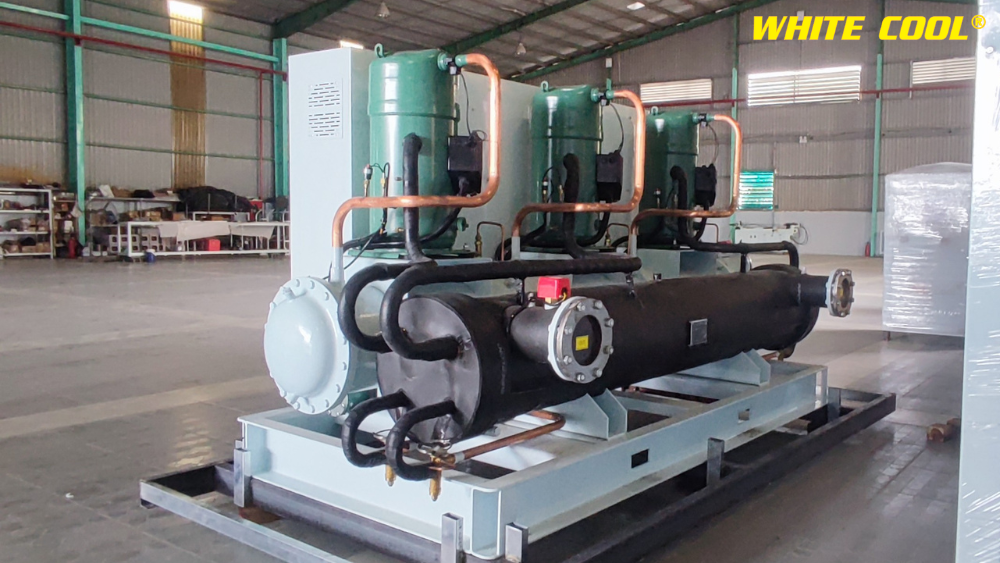
However, "bigger is not always better." In actual operation, a chiller system with excessive capacity compared to demand will frequently operate at low load. These are less than ideal conditions, leading to a significant decrease in energy efficiency.
When chillers operate at low load for extended periods, short cycling can occur, increasing equipment wear and tear and consuming more electricity than in stable operation. Simultaneously, initial investment costs are significantly higher, including equipment, electrical infrastructure, and auxiliary systems.
Furthermore, an oversized system can lead to design flaws throughout the entire system: pumps, piping, cooling towers, etc. All components increase in cost due to increased capacity, resulting in higher operating costs throughout its lifespan.
THE PROBLEM IS NOT ABOUT CAPACITY - BUT ABOUT SYSTEM DESIGN
In reality, the efficiency of a chiller system depends not only on its nominal capacity but also on how the system is designed and operated. An optimal system is one that can meet the exact load demand at any given time, rather than relying solely on a fixed power output.
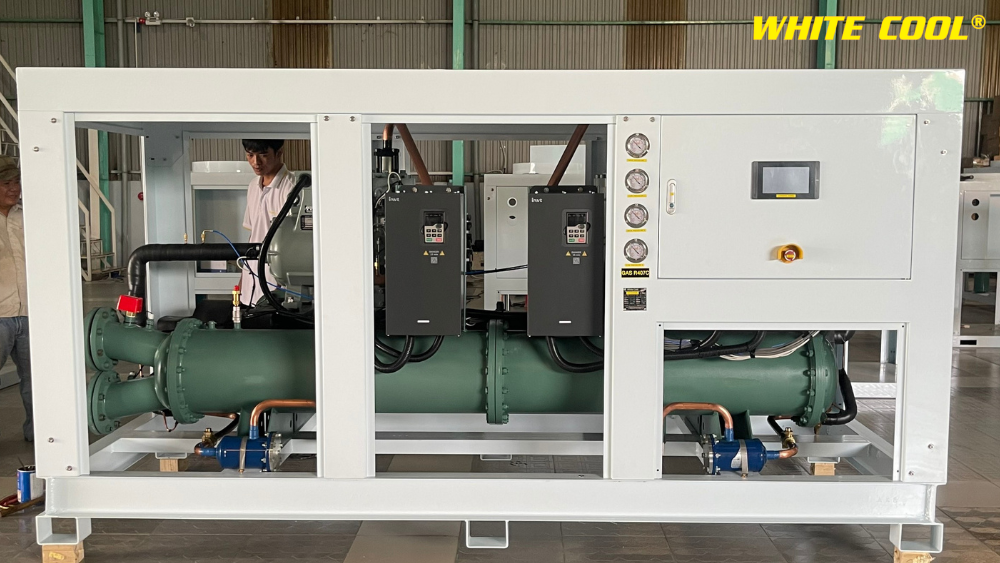
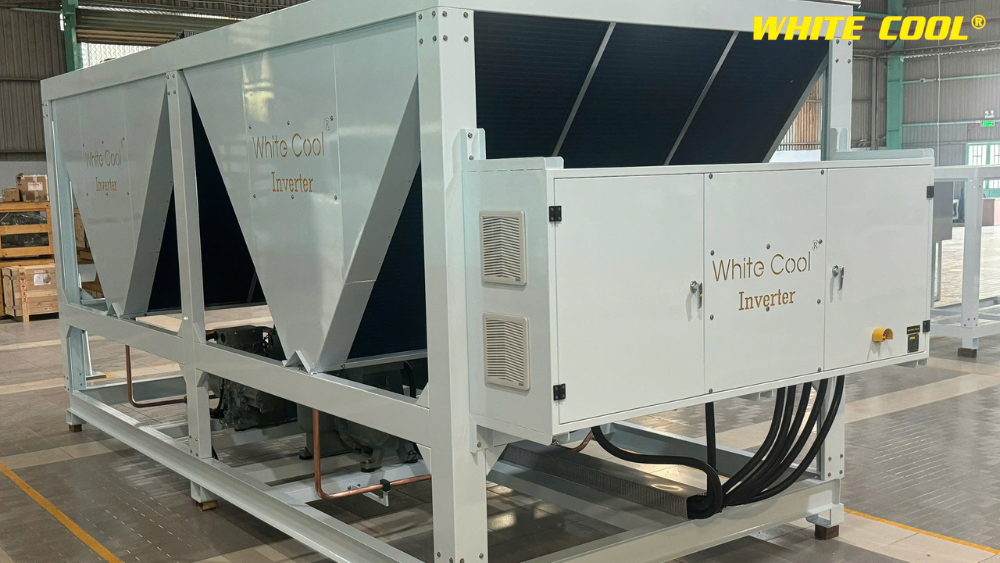
Solutions such as load balancing using multiple small chillers, inverter applications, or intelligent control system designs are increasingly preferred. These solutions allow for flexible system operation, energy savings, and better adaptation to production fluctuations.
Therefore, instead of asking "what power capacity should I choose?", businesses should approach the problem from the perspective of: "which system best suits the actual operating needs and development plan?".
WHAT FACTORS SHOULD BUSINESSES CONSIDER?
To make the right investment decision, businesses need to evaluate many factors comprehensively instead of focusing solely on equipment capacity. First and foremost is the current cooling demand and projected future growth. Accurate analysis of cooling load helps avoid undercapacity or overcapacity, preventing waste.
In addition, industry specifics, stability requirements, environmental conditions, and water quality directly affect the efficiency and lifespan of the chiller system.
A crucial but often overlooked factor is the lifecycle cost. In reality, operating costs throughout the system's lifespan often account for a much larger proportion than the initial investment cost. Therefore, choosing an energy-efficient and easy-to-operate system will provide greater long-term economic benefits.
WHITE COOL'S SOLUTION: OPTIMIZED TO ACTUAL NEEDS
At White Cool, we understand that each business is a unique problem. Instead of providing a "one-size-fits-all" solution, White Cool focuses on consulting, designing, and manufacturing chillers tailored to each customer's specific needs.
White Cool's technical team will work alongside your business from surveying and analyzing cooling load to proposing the optimal system configuration. The goal is not only to meet capacity requirements but also to ensure operational efficiency, energy savings, and future scalability.
If you are considering investing in or upgrading your chiller system, having a partner who understands the technical and operational aspects will help you avoid unnecessary costs.
CONCLUSION
Investing in large-capacity chillers can offer advantages in some cases, but can also become a burden if not carefully planned. The important thing is not choosing large or small capacity, but selecting a solution that suits your operational needs and long-term development strategy.
If you are looking for an optimal chiller system solution, partnering with a specialized and experienced company will help you avoid unnecessary risks and maximize investment efficiency. Contact White Cool today for advice on the most suitable solution for your business!