



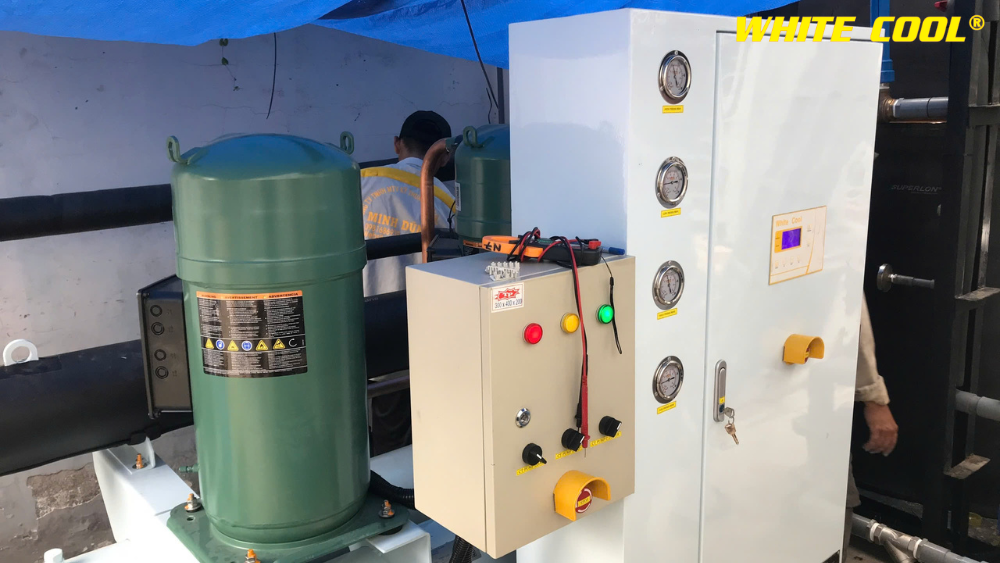
WHAT IS CHILLER PART-LOAD OPERATION AND WHY DOES IT OCCUR?
Part-load operation refers to a chiller running below its designed capacity. This often happens when systems are oversized for “safety,” or when actual cooling demand is lower than the original design assumptions. Additionally, factors such as changes in production output, expansion or reduction of production lines, and environmental conditions all contribute to fluctuating cooling demand.
In many cases, systems lack the flexibility to adjust according to load variations, forcing chillers to cycle on and off frequently or operate inefficiently. This is the root cause of energy waste and increased equipment wear.
In practice, oversizing a chiller system for safety is a common mistake. When the system consistently operates far below its designed capacity, it rarely reaches optimal efficiency. At the same time, frequent start-stop cycles (short cycling) not only increase energy consumption but also place significant stress on critical components such as the compressor.
IMPACT OF PART-LOAD OPERATION ON ENERGY EFFICIENCY
Chiller efficiency is typically optimized within a specific load range—not across all operating conditions. When running at low loads without proper control mechanisms, the system consumes more energy per unit of cooling output.
Short cycling is a common symptom of poor part-load operation. Each restart requires a high amount of energy and reduces overall system efficiency. Over time, this leads to significantly higher electricity consumption and operating costs than initially expected.
IMPACT ON SYSTEM LIFESPAN AND STABILITY
Beyond energy costs, part-load operation directly affects equipment lifespan. Frequent start-stop cycles increase stress on the compressor—the most critical and expensive component in a chiller system.
Operating under unstable conditions can also lead to issues such as pressure fluctuations, uneven oil distribution, and imprecise temperature control. These factors increase the risk of failures and reduce overall system durability.
When the system consistently operates outside its optimal efficiency range, components experience uneven loading and degrade faster than expected. Parts such as expansion valves, sensors, pumps, and heat exchangers are also affected by prolonged unstable operation. Over time, this not only increases maintenance frequency but also significantly shortens the overall lifecycle of the system.
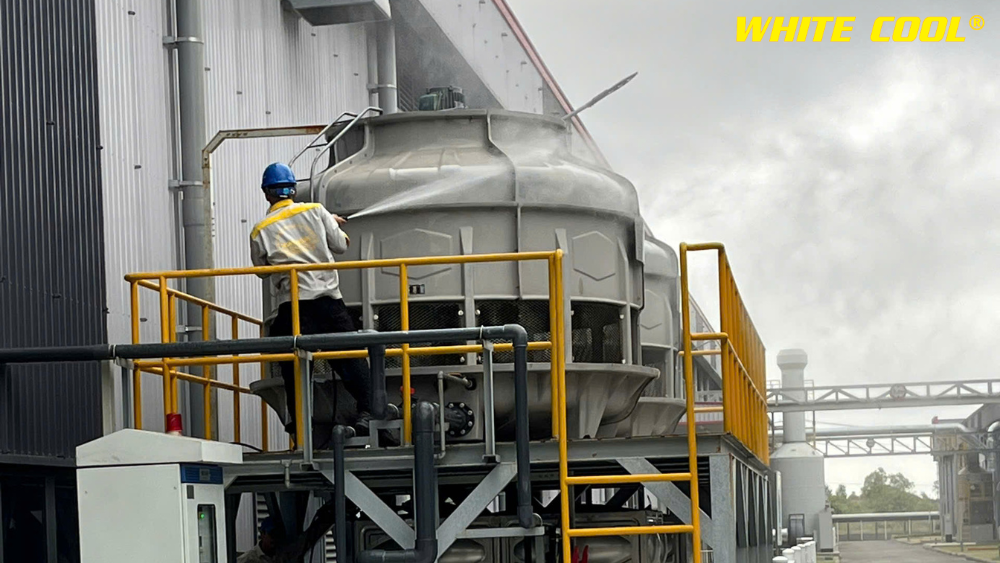
WHITE COOL’S SOLUTION FOR OPTIMIZING PART-LOAD OPERATION
Understanding real-world operating conditions, White Cool focuses on designing chiller systems that maintain high efficiency even under part-load conditions. Instead of oversizing equipment, solutions are developed based on detailed cooling load analysis to ensure the system operates closely aligned with actual demand.
White Cool integrates advanced control technologies such as inverter (variable speed) systems, load-based capacity modulation, and overall system optimization. This enables chillers to operate stably across a wide range of load conditions while maintaining high efficiency.
In addition, real-time monitoring systems allow businesses to track performance indicators continuously, detect abnormalities early, and make timely adjustments. This not only reduces energy consumption but also minimizes the risk of breakdowns and extends equipment lifespan. White Cool’s maintenance and servicing programs are also tailored to real operating conditions, ensuring systems remain in optimal condition and minimizing the negative impacts of prolonged part-load operation.
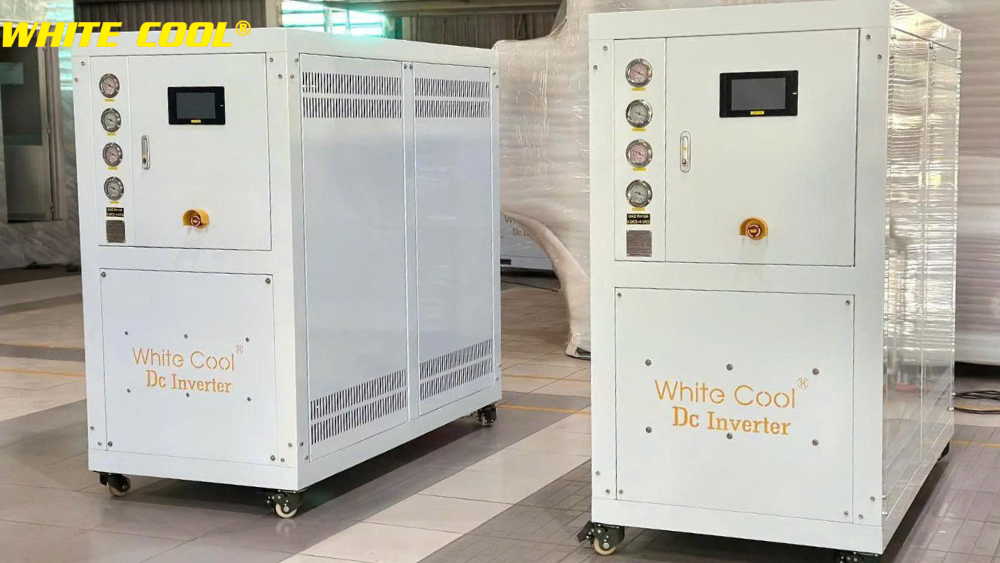
CONCLUSION
Part-load operation is unavoidable in chiller systems, but it can be effectively managed with proper design and control strategies. Understanding its impact on efficiency and lifespan enables businesses to make better investment and operational decisions.
With optimized solutions from White Cool, businesses can not only reduce energy costs but also improve system durability and overall operational stability.
Contact White Cool today for expert consultation on the best solution for your factory and avoid long-term issues caused by inefficient part-load chiller operation.