



WHY RAPID MOLD COOLING IS NECESSARY?
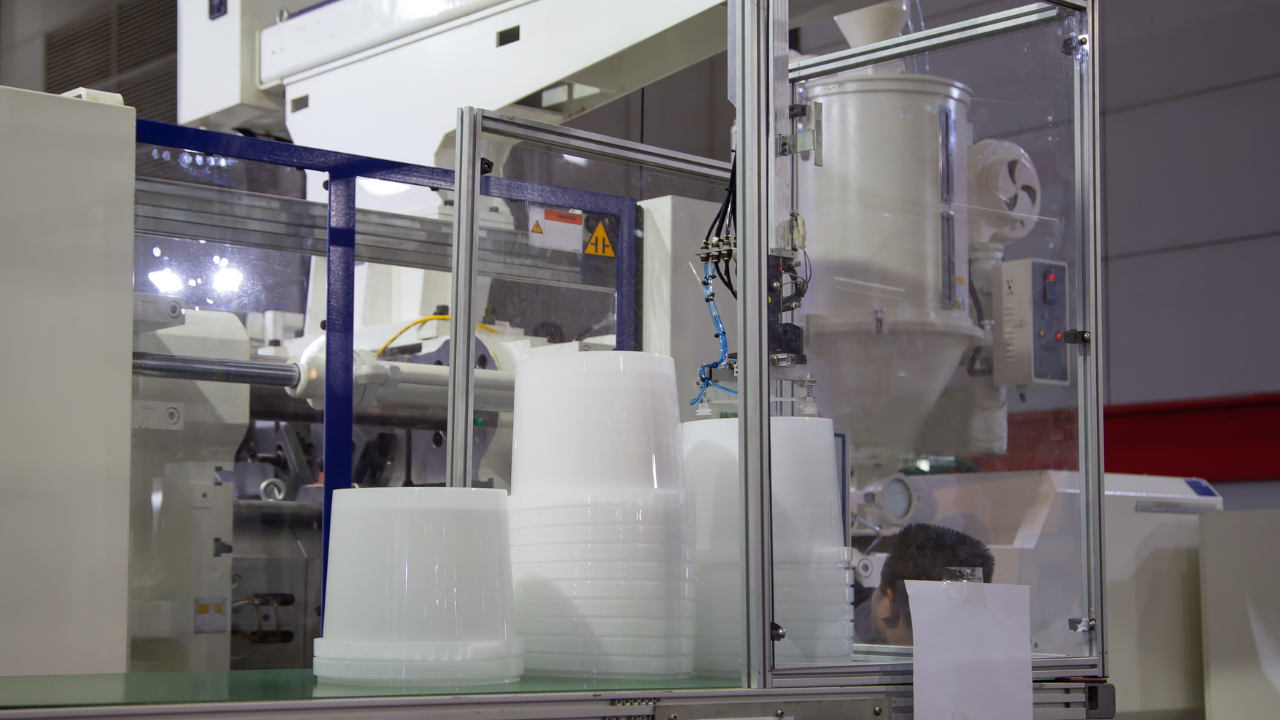
In the injection molding process, the mold cooling stage accounts for 60–70% of the total cycle time. After hot plastic is injected into the mold, the mold needs to be cooled quickly so the plastic can solidify and stay in the correct shape. If this step is prolonged, the entire production line will slow down, reducing productivity and increasing production costs.

Conversely, when mold temperature is not kept stable, defects such as warpage, shrinkage, and dimensional errors easily occur. Therefore, rapid and accurate mold cooling is the key factor that determines product quality and production efficiency. In this context, dedicated cooling systems such as industrial chillers are becoming the trusted solution for many plastic factories to ensure high productivity and energy efficiency.
CURRENT METHODS FOR COOLING PLASTIC MOLDS
Today, businesses can apply one of the three common mold cooling methods:
Cooling with regular tap water
This method has low investment cost and is easy to implement. However, its major drawback is unstable water temperature, especially in hot and humid environments. Relying on the water source limits cooling capability and makes precise control difficult.
Using a cooling tower
Cooling towers can reduce the temperature of circulating water but are limited to temperatures close to ambient conditions (around 30–35°C). Therefore, this method does not meet the requirement for fast and deep cooling for high-speed injection molds.
Using an industrial chiller
This is the most modern and effective solution. Chillers can cool water down to 5–15°C, helping shorten cooling time and maintain stable temperatures during production. From a productivity perspective, rapid mold cooling with a chiller helps maintain stable mold temperature, shorten the molding cycle, and improve the quality of finished products.
HOW DOES RAPID MOLD COOLING WITH A CHILLER WORK?
A chiller-based mold cooling system operates based on a closed-loop cycle:
- Chilled water produced by the chiller is pumped through piping to the mold channels.
- The water absorbs heat from the mold and then returns to the chiller to be cooled again, repeating the cycle.
The structure of a chiller includes four main components:
- Compressor: compresses the refrigerant to create the required pressure and temperature for the cooling cycle.
- Condenser: releases heat into the environment.
- Evaporator: absorbs heat from the circulating water to produce chilled water.
- Circulation pump and chilled water tank: ensure water flow and maintain stable water volume.
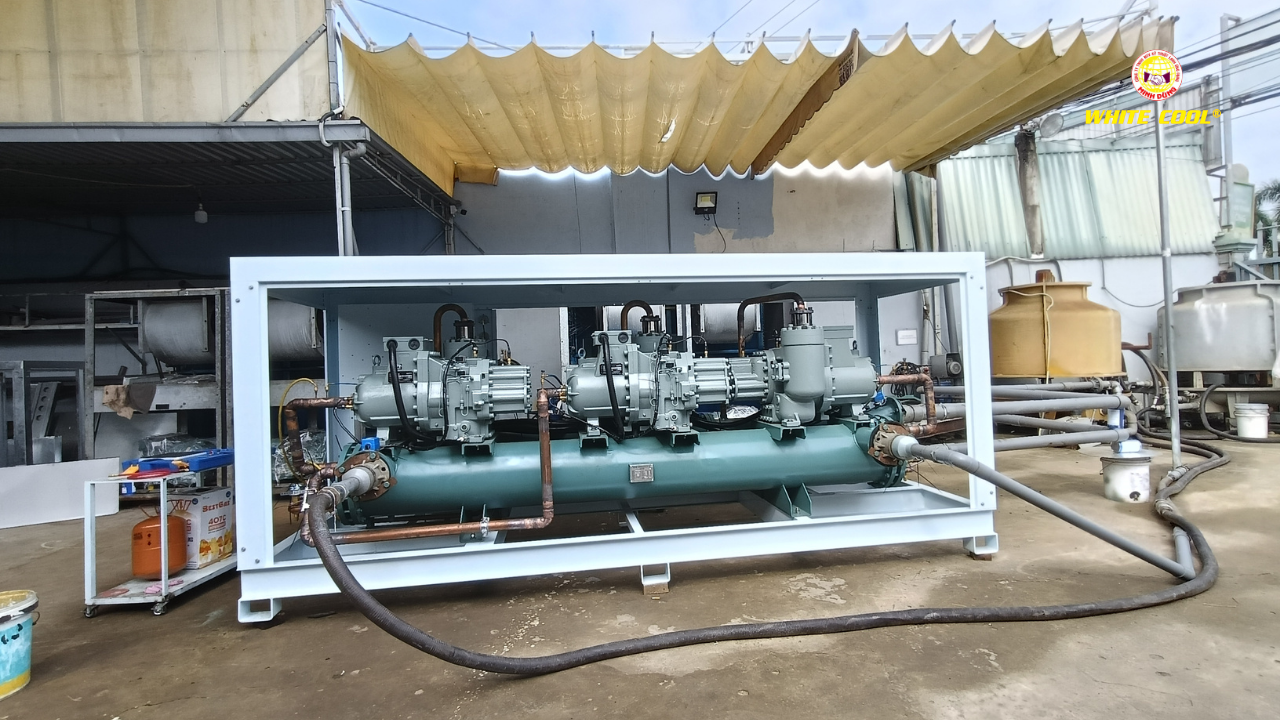
When operated correctly, the system can control temperature with ±0.5°C accuracy, helping prevent warpage or shrinkage — particularly important for products requiring high dimensional and surface precision such as electronic components, thin packaging, or technical plastic parts.
BENEFITS OF RAPID MOLD COOLING WITH A CHILLER
Applying a chiller to injection molding brings many clear benefits:
- Faster injection cycles: Cooling time can be reduced by 20–40%, increasing the number of molding cycles per day without affecting quality.
- High accuracy: Stable mold temperature ensures standard product shape and minimizes dimensional deviation.
- Energy savings: DC Inverter chillers can automatically adjust compressor capacity, significantly reducing energy consumption compared to conventional chillers.
- Longer mold lifespan: Even cooling helps reduce thermal stress, minimize cracking, and maintain mold performance over time.
- Stable production: The system can operate continuously, meeting the high-intensity requirements of automated production lines.
Thanks to these advantages, chillers have become essential equipment in modern plastic manufacturing.
PRACTICAL APPLICATIONS AND EXPERIENCE IN SELECTING THE RIGHT CHILLER FOR MOLD COOLING
When selecting a chiller for an injection molding system, businesses should consider:
- Number and size of molds: small or simple molds may use 5–10 HP chillers; large or multi-cavity molds require 15–30 HP.
- Required mold temperature: thin or fast-cooling products require chillers with lower temperature ranges.
- Water flow rate and piping material: ensure no clogging and resistance to pressure and corrosion.
- Installation location: place in a ventilated area, avoid direct sunlight, and allow easy maintenance.
Performance optimization tips:
- Regularly clean heat exchangers to prevent scaling.
- Routinely check refrigerant and operating pressure.
- Use an automatic control system to monitor temperature and water flow.
These factors help the chiller operate stably, save energy, and extend equipment lifespan.
WHITE COOL CHILLER SOLUTION FOR PLASTIC MOLDS: FAST COOLING, ENERGY SAVING
White Cool is a brand specializing in industrial chillers for plastics, mold cooling, and manufacturing facilities. With many years of experience in cooling technology, White Cool provides chiller models that offer rapid mold cooling, stable operation, and energy efficiency.
Three outstanding advantages of White Cool chillers:
- DC Inverter compressors save up to 30% energy, operate quietly, and ensure durability.
- Precise temperature control ±0.5°C, suitable for high-speed molding and products requiring strict dimensional accuracy.
- Robust design, easy maintenance, integrated intelligent controller, and built-in monitoring and automatic fault alarms.
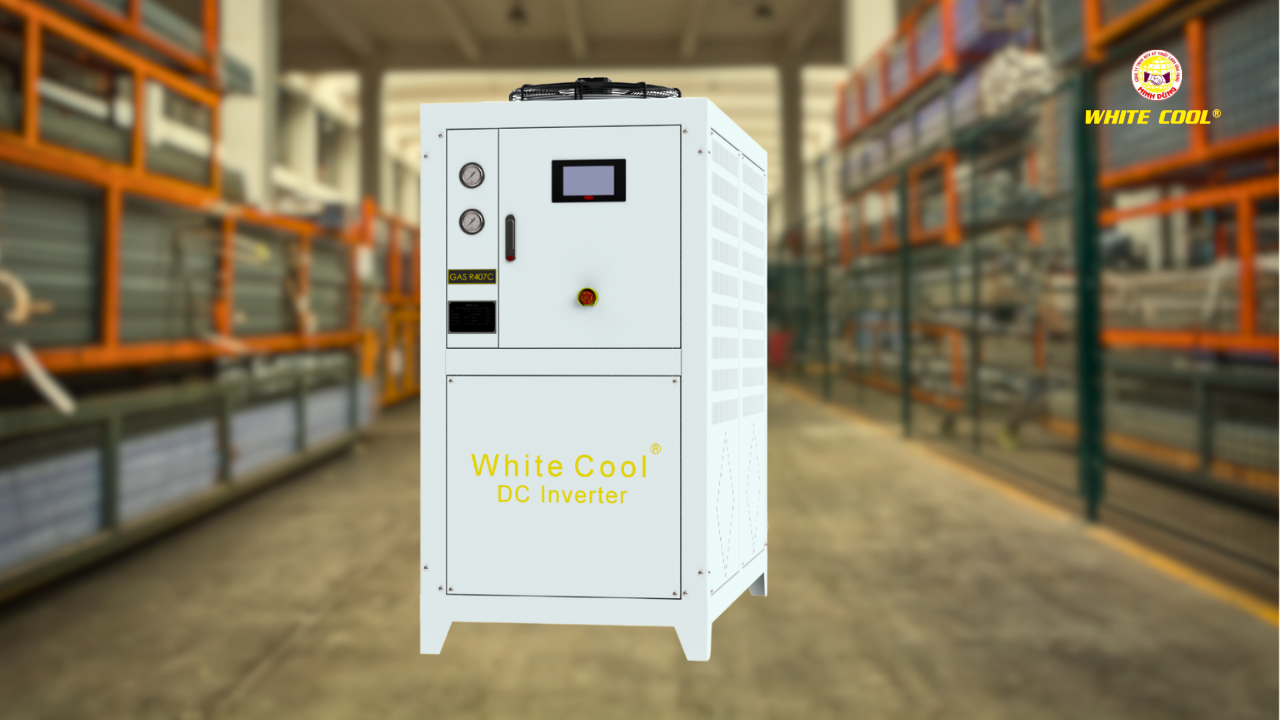
Contact White Cool for consultation on selecting the optimal chiller capacity for your mold cooling needs — a solution that delivers fast cooling, energy savings, and improved production quality.