



EMISSION REDUCTION POTENTIAL OF HVAC SYSTEMS
According to industrial energy research, HVAC systems can account for 40–60% of total electricity consumption in a building, commercial complex, or manufacturing plant. Improving system efficiency by just 10–20% can help enterprises reduce tens of tons of CO₂ emissions per year, while significantly lowering operational costs.

HVAC energy consumption depends on multiple factors: chiller type, ability to adjust load according to demand, heat exchanger efficiency, refrigerant properties, and automation control level. Among these, the industrial chiller plays the central role in the entire cooling process.
Therefore, upgrading HVAC technology not only improves production efficiency but also represents a strategic step toward reducing operational carbon emissions, a critical component in achieving Net Zero goals.
SOLUTIONS TOWARD CARBON NEUTRALITY IN HVAC SYSTEMS
To realize emission reduction strategies during operation, businesses can implement the following three solution groups:
Application of Energy-Efficient Technologies and Equipment
The focus lies in switching to high-efficiency equipment, using Inverter or Variable Speed Compressors to modulate capacity according to actual load, minimizing energy waste during partial-load or idle operation.
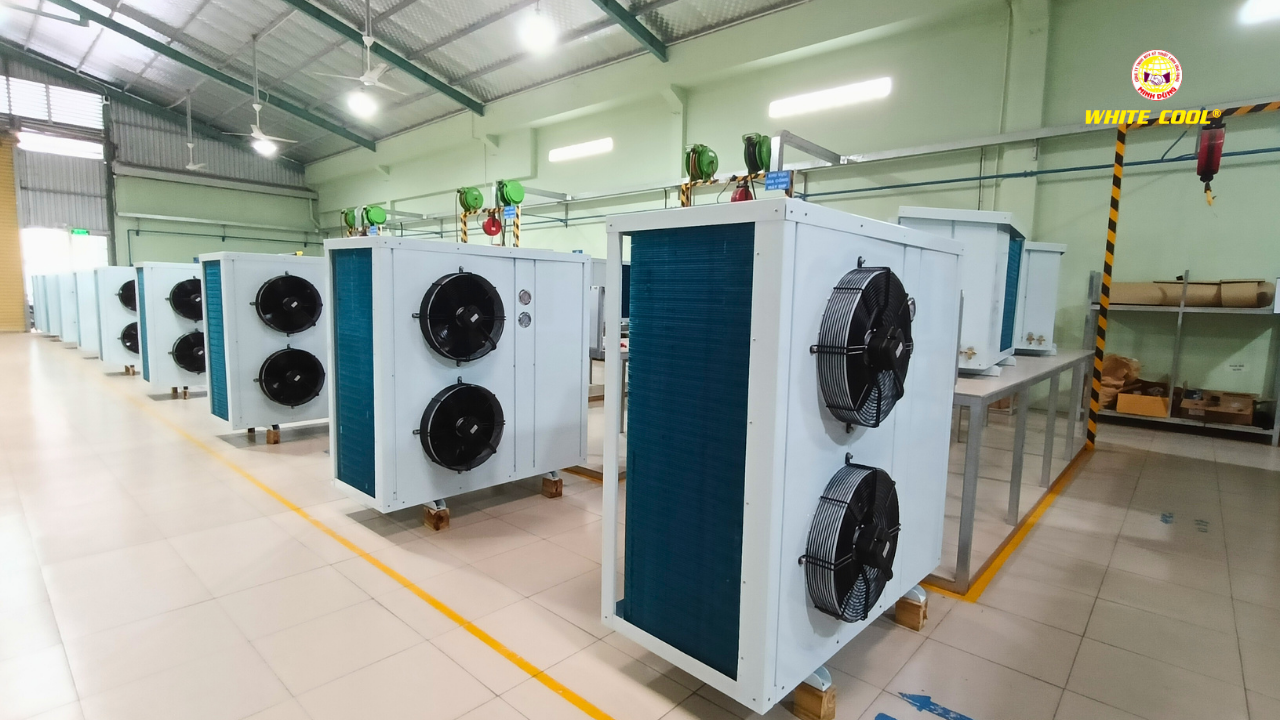
Additionally, adopting environmentally friendly refrigerants such as R32, R410A, or next-generation R134a helps reduce greenhouse gas emissions.
Other improvements include optimizing piping layout, circulation pumps, air fans, and heat exchangers to stabilize operation and minimize energy loss throughout the system.
Automation and Smart HVAC Management
Smart control systems, such as BMS (Building Management System) and IoT platforms, are becoming increasingly popular in modern factories. Through temperature, pressure, and flow sensors, these systems automatically adjust cooling capacity, reducing overload and improper temperature settings.
Meanwhile, AI and real-time data analytics enable predictive maintenance and energy demand forecasting, maintaining maximum operational efficiency and preventing early system degradation.
Integration of Renewable Energy and Carbon Offset
Combining rooftop solar power to supply HVAC systems or participating in Carbon Offset/REC (Renewable Energy Certificate) programs is also an effective pathway. This not only cuts electricity costs but also helps enterprises meet ESG criteria in their sustainability reports.
WHITE COOL DC INVERTER CHILLER – A BREAKTHROUGH IN GREEN HVAC
Among today’s energy-efficient technologies, the White Cool DC Inverter chiller — an exclusive brand of Minh Dung Company — has become a preferred choice for factories seeking energy savings, environmental friendliness, and seamless integration with existing HVAC systems.
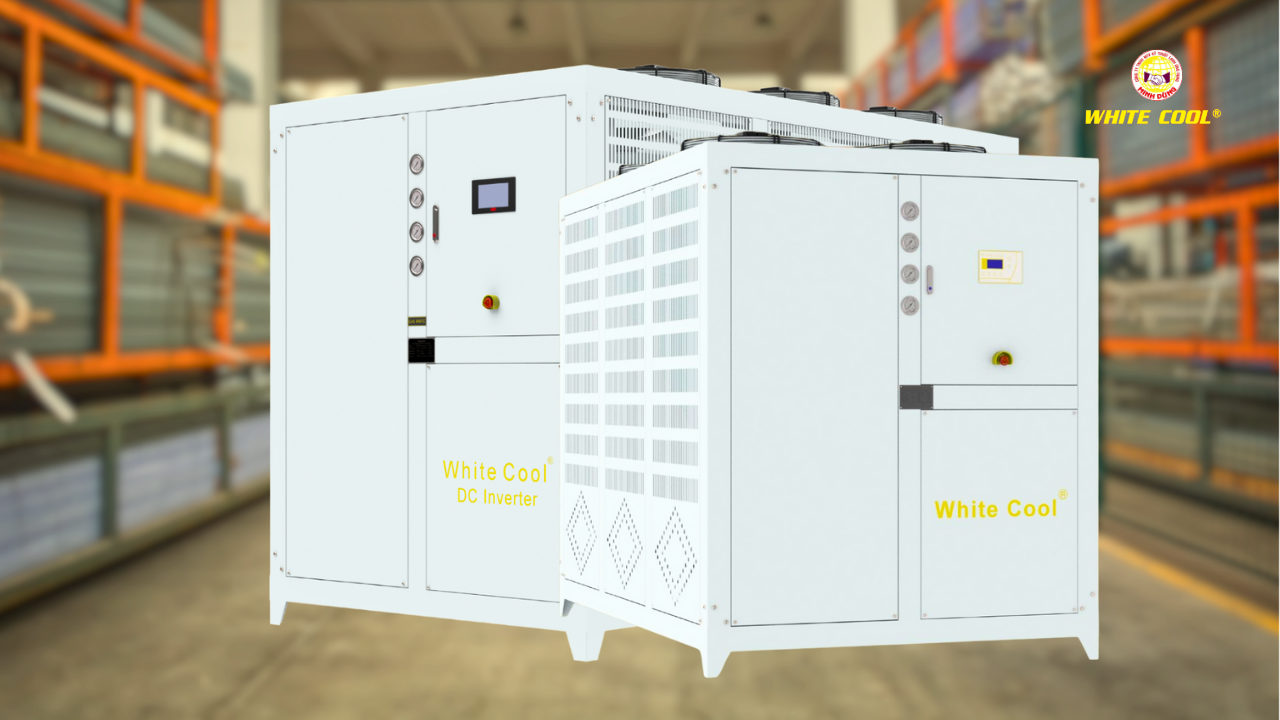
White Cool represents Minh Dung’s premium chiller brand, developed and manufactured to deliver high durability, stable performance, and optimized efficiency across industries such as plastics, food processing, electronics, pharmaceuticals, and mold manufacturing.
In addition, Minh Dung provides independent ODM chiller manufacturing services, allowing clients to customize design, capacity, and cooling technology tailored to each production line.
Outstanding Features of White Cool DC Inverter Chiller
- DC Inverter compressor technology, saving 30–45% electricity compared to conventional chillers.
- Stable operation under fluctuating loads, meeting dynamic production requirements.
- Use of eco-friendly refrigerants, helping reduce indirect CO₂ emissions.
- Equipped with a smart control system to monitor temperature, pressure, and power consumption in real time for optimal energy efficiency.
With flexible design, high performance, and a focus on green technology, the White Cool DC Inverter chiller helps enterprises reduce energy costs, enhance ESG standards, and move closer to achieving a Net Zero Factory.
CONCLUSION – MOVING TOWARD HVAC CARBON NEUTRALITY WITH WHITE COOL
Achieving HVAC carbon neutrality is no longer just a trend but an essential requirement for sustainable business development.
Innovative solutions such as the White Cool DC Inverter chiller have proven their effectiveness in simultaneously cutting emissions and improving operational efficiency, empowering businesses to optimize energy use while demonstrating environmental responsibility.
Contact White Cool today for consultation on energy-efficient chiller solutions and support your enterprise on the journey toward Net Zero – Green, Efficient, and Sustainable Operations.