



WHAT ROLE DO CHILLERS PLAY IN EV MANUFACTURING PLANTS?
Electric vehicle manufacturing relies heavily on automated equipment, industrial robots, CNC machines, laser welding systems, assembly lines, and high-power electronic testing equipment. During operation, these machines generate a significant amount of heat.
Without proper temperature control, machining accuracy can decline, electronic components may become unstable, and equipment lifespan can be significantly reduced. Chiller systems provide consistent cooling for production equipment, ensuring continuous operation with high efficiency.
In addition to cooling machinery, chillers also help create a stable manufacturing environment, particularly for production processes that demand exceptional precision.
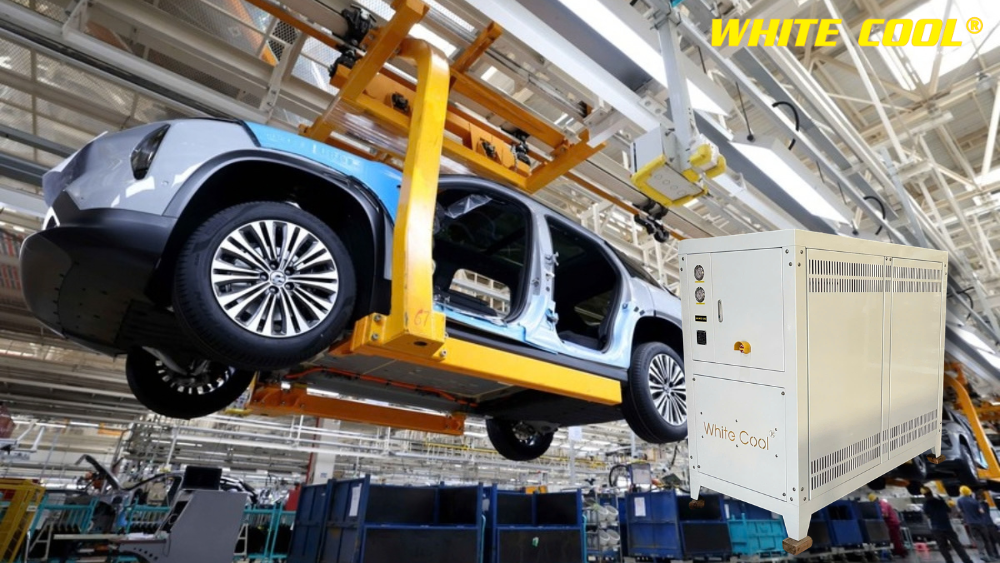
CHILLERS IN EV BATTERY PRODUCTION
The battery is considered the most critical component of an electric vehicle and is also the manufacturing stage that requires the strictest temperature control.
During battery cell production, electrode coating, drying, pressing, tab welding, and module assembly, both ambient and equipment temperatures must remain stable to ensure product quality.
Excessive temperature fluctuations can reduce production efficiency, increase defect rates, and compromise battery performance. As a result, many lithium-ion battery manufacturers utilize industrial chiller systems to maintain precise temperature control throughout advanced production processes.
COOLING LASER WELDING SYSTEMS AND MACHINING EQUIPMENT
Laser welding technology is widely used in the production of battery cells, vehicle frames, battery enclosures, and various metal components of electric vehicles.
High-power laser sources generate substantial heat during operation. Without efficient cooling, laser output may decrease, weld quality can become inconsistent, and equipment lifespan may be shortened.
Industrial chillers maintain precise operating temperatures for laser systems, ensuring consistent welding quality while extending the service life of the entire laser equipment.
TEMPERATURE CONTROL FOR TESTING AND INSPECTION SYSTEMS
After assembly, batteries, electric motors, and electronic controllers must undergo a series of performance, durability, and safety tests.
Testing equipment often operates continuously under heavy loads, generating considerable heat. If temperatures are not properly controlled, test results may become inaccurate and fail to reflect the true performance of the products.
By maintaining stable testing conditions, chiller systems improve measurement accuracy and ensure compliance with strict quality standards.
CHILLERS HELP REDUCE ENERGY CONSUMPTION IN EV FACTORIES
The electric vehicle industry continuously strives to improve energy efficiency and reduce carbon emissions.
Modern chiller systems are equipped with inverter technology, intelligent PLC control, and load-based capacity modulation. These features allow cooling capacity to automatically adjust according to actual demand, reducing power consumption while maintaining stable system performance.
In addition, selecting high-efficiency chillers helps manufacturers reduce their Total Cost of Ownership (TCO) throughout the entire lifecycle of the cooling system.
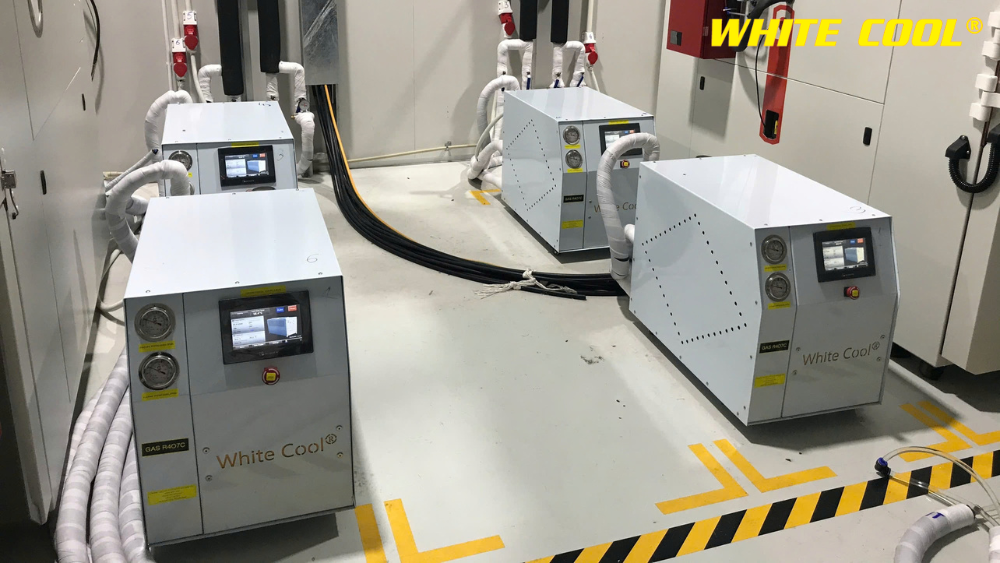
THE FUTURE OF CHILLERS IN SMART EV MANUFACTURING
With the advancement of Smart Factory technologies, industrial chillers are increasingly integrated with PLC controllers, HMI interfaces, SCADA systems, and IoT platforms.
Operators can monitor temperature, pressure, water flow, power consumption, and overall chiller performance in real time. Operational data is continuously collected for performance analysis, predictive maintenance, and system optimization.
This intelligent approach minimizes production downtime, improves equipment reliability, and supports the continuous manufacturing requirements of modern EV factories.
WHITE COOL – YOUR TRUSTED PARTNER FOR CHILLER SOLUTIONS IN ELECTRIC VEHICLE MANUFACTURING
White Cool designs and manufactures custom industrial chiller systems tailored to the cooling requirements of electric vehicle production, including battery manufacturing lines, laser welding equipment, CNC machines, industrial robots, testing systems, and other advanced manufacturing processes.
Our experienced engineering team conducts cooling load analysis, evaluates operating conditions, and develops customized chiller solutions for each project. Every system is carefully engineered to optimize cooling capacity, energy efficiency, and long-term operational reliability, meeting the demanding requirements of modern manufacturing facilities.
Beyond chiller design and manufacturing, White Cool also provides installation, commissioning, preventive maintenance, PLC control system optimization, and comprehensive after-sales technical support. We are committed to delivering reliable, energy-efficient cooling solutions that support our customers' long-term sustainable growth.
If your company is planning to build an EV manufacturing facility or upgrade the cooling system of an existing production line, contact White Cool for professional consultation and customized chiller solutions designed specifically for your operational requirements.
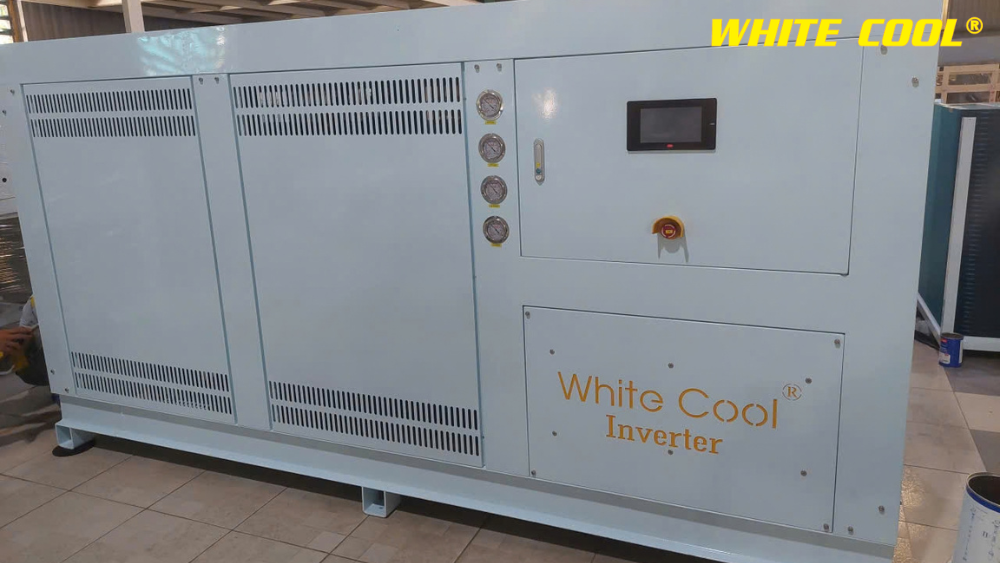
CONCLUSION
In the electric vehicle industry, chillers are far more than simple cooling equipment—they are a critical factor in ensuring product quality, maintaining production accuracy, and maximizing operational efficiency. From battery manufacturing and laser welding to precision machining and quality testing, industrial chiller systems play a vital role in temperature control and the overall reliability of manufacturing facilities.
Investing in a properly designed chiller system helps manufacturers reduce energy consumption, minimize production downtime, extend equipment lifespan, and optimize long-term operating costs. With years of experience in designing, manufacturing, and implementing industrial chiller solutions, White Cool is ready to support businesses with reliable, energy-efficient, and future-ready cooling systems for the rapidly evolving electric vehicle industry.